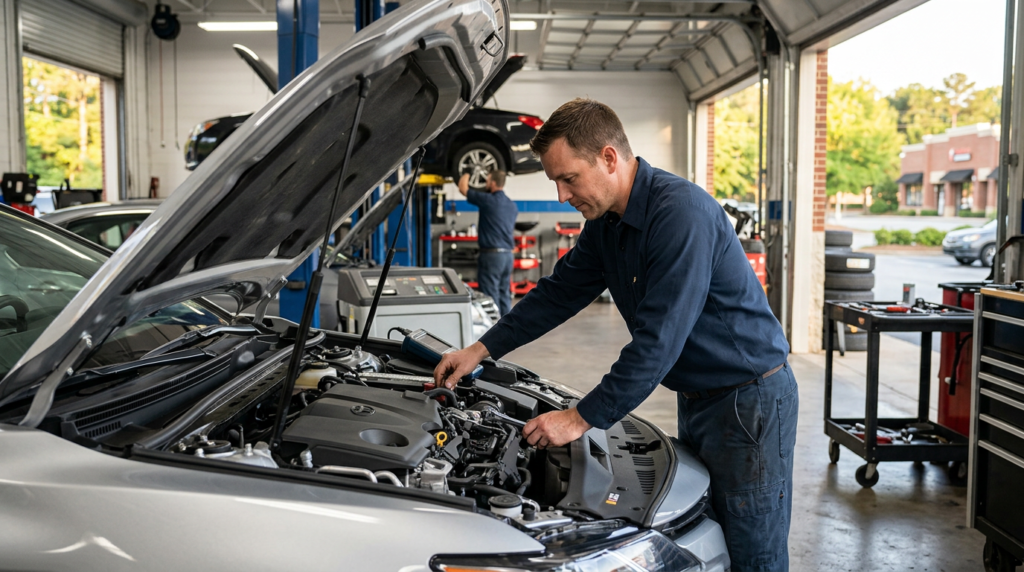
Quick answer: Choose a trustworthy Suwanee repair shop by looking for clear communication, written estimates, and a willingness to show you the worn part or explain test results. Ask what diagnostics they’ll perform before replacing anything, what warranty they provide on parts and labor, and how they handle follow-up if the problem returns. Consistent reviews that mention honesty and good explanations matter more than rock-bottom pricing.
What to Look For Before You Book
A reliable shop makes the process feel straightforward: you describe symptoms, they confirm the concern, they test, then they recommend repairs with a written estimate. If you’re searching for automotive repair Suwanee GA, prioritize places that explain what they found in plain language and can show you the evidence (photos, measurements, scan data, or the part itself).
Pay attention to how they talk about “diagnosis.” Good shops don’t jump straight to replacing parts based on a guess, especially for check-engine lights, intermittent stalling, or electrical issues. They should outline the first step (scan, road test, smoke test, fuel pressure test, battery/charging test) and get approval before moving from testing to repair.
Also ask about warranty terms and how comebacks are handled. A solid warranty isn’t just a promise; it’s a process: what’s covered, for how long, and what happens if the symptom returns. Clear answers here usually correlate with overall professionalism.
Questions That Reveal How a Shop Operates
A few specific questions can quickly separate careful technicians from parts-changers. Ask, “What tests will confirm the cause?” and “What would make you rule out other likely issues?” For example, a misfire could be spark plugs, ignition coils, a vacuum leak, a fuel injector, or low compression; a shop should be able to describe how they’ll narrow it down.
Request an itemized estimate before work begins. It should break out labor and parts, and it should state whether the estimate could change after teardown or additional diagnostics. If a shop can’t explain why a repair is needed, or pressures you with vague urgency, that’s a reason to pause.
Finally, ask about parts quality. You don’t need a lecture on brands, but you should get a clear choice between original-equipment style parts, reputable aftermarket parts, and budget options when appropriate—along with the trade-offs in longevity and warranty support.
Common Warning Signs and How to Avoid Surprise Bills
Surprise bills often come from unclear authorization. Set a “call me if it’s over $X” limit and insist on approval for any added work. A typical diagnostic fee may apply for check-engine or drivability problems; that’s normal as long as the shop explains what it covers and what you’ll receive (codes plus test results, not just “needs a sensor”).
Be cautious if you hear blanket statements like “It needs a tune-up” without details, or if they recommend major work without showing test results. Another red flag is skipping basics: battery/charging checks for electrical complaints, cooling-system pressure testing for overheating, or brake measurements for brake noise. Good work starts with verifying the complaint and measuring wear, not guessing.
Ask for the maintenance priorities if they find multiple issues. A trustworthy shop will separate safety items (brakes, tires, steering) from “soon” items (leaking valve cover gasket) and “monitor” items (minor seepage), so you can plan without feeling cornered.
How to Get the Best Result From Any Repair Visit
You’ll get faster, more accurate service if you bring specifics: when the noise happens, whether it’s hot or cold, speed range, weather, and any recent work. If a dash light is on, note whether it flashes or stays solid. If the problem is intermittent, a short video can help.
After the repair, ask what was done to confirm the fix. For example, a road test, re-scan for pending codes, brake burnish procedure, or recheck for leaks. Keep the invoice for maintenance history; it helps later if you sell the car or chase a recurring issue.
If you want a local shop that can walk you through the diagnosis and next steps without talking down to you, Team Ryan Automotive is a good place to get help.